You are here
Introduction to Wireless LAN and IEEE 802.11
Submitted by gc on Mon, 02/18/2013 - 07:39
A wireless LAN (WLAN or WiFi) is a data transmission system designed to provide location-independent network access between computing devices by using radio waves rather than a cable infrastructure
In the corporate enterprise, wireless LANs are usually implemented as the final link between the existing wired network and a group of client computers, giving these users wireless access to the full resources and services of the corporate network across a building or campus setting.
The widespread acceptance of WLANs depends on industry standardization to ensure product compatibility and reliability among the various manufacturers.
The 802.11 specification [IEEE Std 802.11 (ISO/IEC 8802-11: 1999)] as a standard for wireless LANS was ratified by the Institute of Electrical and Electronics Engineers (IEEE) in the year 1997. This version of 802.11 provides for 1 Mbps and 2 Mbps data rates and a set of fundamental signaling methods and other services. Like all IEEE 802 standards, the 802.11 standards focus on the bottom two levels the ISO model, the physical layer and link layer (see figure below). Any LAN application, network operating system, protocol, including TCP/IP and Novell NetWare, will run on an 802.11-compliant WLAN as easily as they run over Ethernet.
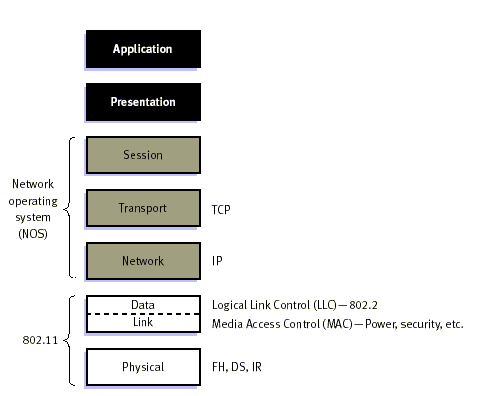
Fig 1: "IEEE 802.11 and the ISO Model"
The major motivation and benefit from Wireless LANs is increased mobility. Untethered from conventional network connections, network users can move about almost without restriction and access LANs from nearly anywhere.
The other advantages for WLAN include cost-effective network setup for hard-to-wire locations such as older buildings and solid-wall structures and reduced cost of ownership-particularly in dynamic environments requiring frequent modifications, thanks to minimal wiring and installation costs per device and user. WLANs liberate users from dependence on hard-wired access to the network backbone, giving them anytime, anywhere network access. This freedom to roam offers numerous user benefits for a variety of work environments, such as:
- Immediate bedside access to patient information for doctors and hospital staff
- Easy, real-time network access for on-site consultants or auditors
- Improved database access for roving supervisors such as production line managers, warehouse auditors, or construction engineers
- Simplified network configuration with minimal MIS involvement for temporary setups such as trade shows or conference rooms
- Faster access to customer information for service vendors and retailers, resulting in better service and improved customer satisfaction
- Location-independent access for network administrators, for easier on-site troubleshooting and support
- Real-time access to study group meetings and research links for students
Read on Kindle
Please consider leaving us a review on Amazon if you like it.
Wireless Networking: Introduction to Bluetooth and WiFi

